Car scenes with long dialogue are some of the most challenging shots in any drama. Lighting a moving car is hard, recording clean sound over road noise is harder, and every retake means another loop around the block while the light changes and the traffic gets in the way. So the car stays parked on set with blue or green screens over the windows, and the street is added afterwards. That last step is VFX work, and it decides whether the audience believes the car is moving.
Breed, a Singapore production house, shot the micro drama series I Fell In Love With My Grab Driver for Grab Singapore this way. Almost every scene takes place inside the car. Breed brought Critica in to replace the blue windows with real Singapore driving plates, across a large batch of shots, on a short episodic turnaround.
Why the Footage Could Not Go to the Cloud
The obvious shortcut in 2026 is prompting background replacement either in Higgsfield, KlingAI or Google’s Gemini Omni. Upload the clip, get a clean cut-out back. That route was closed for this job. The talent agreements did not allow the actors’ footage or likeness to be uploaded to cloud AI tools, which rules out every browser-based AI video generator.
So Breed needed AI keying that ran entirely on hardware they could account for. That is where we came in. We run ComfyUI on our own privately hosted GPU machines in the studio. The footage was processed locally, nothing was sent to a third-party service, and no clip was used to train anything. For productions with talent, likeness or confidentiality clauses, that is often the deciding factor, more than the tool itself.
The Shot: Blue Screen Windows in a Parked Car
Car interiors are among the hardest keys in production. The screens sit outside the glass, so they pick up reflections, dirt on the windows and uneven light. Hair crosses the window edge in almost every frame. Seat belts, headrests and grab handles cut across the screen. On this series there was one more catch: the props were blue too, from a swimming basin and swimwear to glasses frames. A traditional colour key sees those as screen and tries to remove them.
CorridorKey in ComfyUI
Most shots went through CorridorKey, the open-source neural keyer from Niko Pueringer of Corridor Digital. Instead of picking a colour and cutting it out, it separates the foreground from the screen pixel by pixel, including the semi-transparent edges where hair and motion blur mix with the background. It has dedicated checkpoints for blue and green screens, and it runs locally.
We built it as a single ComfyUI graph. A coarse alpha hint is made by sampling the blue of the screen, and it only needs to be roughly right. CorridorKey produces the real key, with despill and despeckle built in. The Singapore driving plate is scaled and cropped to the frame, the shot is composited, and quality check views show the alpha, the matte and the despilled foreground side by side, so a bad frame is easy to spot.
Because the graph is saved, the next shot is a matter of swapping the source clip and the plate. For an episodic series with dozens of car shots, that repeatability is where the time is saved.
Keylight in After Effects for the Tricky Shots
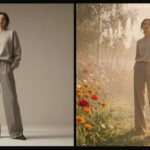
Some shots needed a hand-built key. Those went into After Effects and were keyed manually with Keylight, shot by shot, without the CorridorKey matte. The breakdown below shows a typical one.
With the driving plate behind the key, the blue basin and swimwear were keyed out along with the screen. You can see it in the BG stage: the props turn grey and the plate shows through. The props are then masked and recovered from the original footage, so only the windows are replaced. That is a fix a compositor makes on purpose, and it is why we keep a person in the loop instead of trusting any keyer, AI or not, on every frame.
A parked car does not move, so the plate and the interior are given matching camera shake and a little road vibration. Without it the street slides past a perfectly still cabin and the illusion breaks. Light direction and colour are matched last, so the street reads as the same afternoon as the faces in the car.
CorridorKey and Keylight: What Each One Does Best
CorridorKey in ComfyUI does the heavy lifting: hair, motion blur, soft edges and spill, across a whole batch of shots, with very little hand work. It is the reason a car-heavy series can be turned around on an episodic schedule.
Keylight in After Effects is for the shots that need judgement: props that share the screen colour, a plate that needs re-timing, camera shake, light matching and anything the client wants changed after review. Choosing the right tool per shot is faster than forcing one tool onto every shot.
VFX in Singapore, Without the Cloud
Background replacement, blue and green screen keying, sky replacement and screen inserts are a growing share of the post-production we do for production houses and agencies. Many of those jobs now carry clauses about where footage can be processed. Our pipeline is built for that: privately hosted ComfyUI for the AI passes, with AI video production and conventional compositing under one roof. We wrote about running models on our own machines in our LTX 2.5 vs MiniMax H3 test, and the same setup handled this job.
If you are planning a shoot with car interiors, a studio set that needs a real location behind it, or footage that cannot leave a controlled environment, talk to us before the shoot. Screen colour, lighting and how the plates are filmed all make the VFX faster and better.
CRITICA is a creative production studio in Singapore. We take brands from research and concept through storyboard to final delivery, producing motion graphics, video, and experiential work for Finance, Healthcare, Technology, Hospitality, Tourism, Oil & Gas, and Renewables. Contact us to discuss a project you have in mind.

FAQ
What is CorridorKey?
CorridorKey is an open-source neural network keyer for green and blue screen footage, made by Niko Pueringer of Corridor Digital. It separates the foreground from the screen pixel by pixel, including hair and motion blur, and outputs a linear alpha and an unmixed foreground. It runs locally and can be used inside ComfyUI.
Can CorridorKey key blue screen footage?
Yes. CorridorKey ships separate checkpoints for blue and green screens. On the Breed and Grab micro drama we used the blue screen checkpoint on car window plates.
Can AI background replacement be done without uploading footage to the cloud?
Yes. We run CorridorKey and our other AI passes in ComfyUI on privately hosted GPU machines in our studio, so the footage never leaves our hardware. This suits productions where talent agreements or confidentiality clauses rule out cloud AI tools.
Do you still need After Effects if you use an AI keyer?
For many shots the AI key is close to final. On the Breed and Grab micro drama, the trickier shots were keyed manually with Keylight in After Effects instead, to recover props that shared the screen colour, add camera shake to match a moving car, and match light and colour between the plate and the actors.
Is blue screen or green screen better for car interiors?
Both work. Blue screen spills less on skin and suits darker interiors, but any blue props, costumes or glasses in the shot will be caught by the key and must be recovered in compositing. Tell your VFX team the screen colour and props before the shoot.
Does Critica provide VFX services in Singapore?
Yes. Critica is a creative production studio in Singapore that handles keying, background replacement, compositing, motion graphics and 3D for brands, agencies and production houses. Contact info@criticatv.com with your brief.